
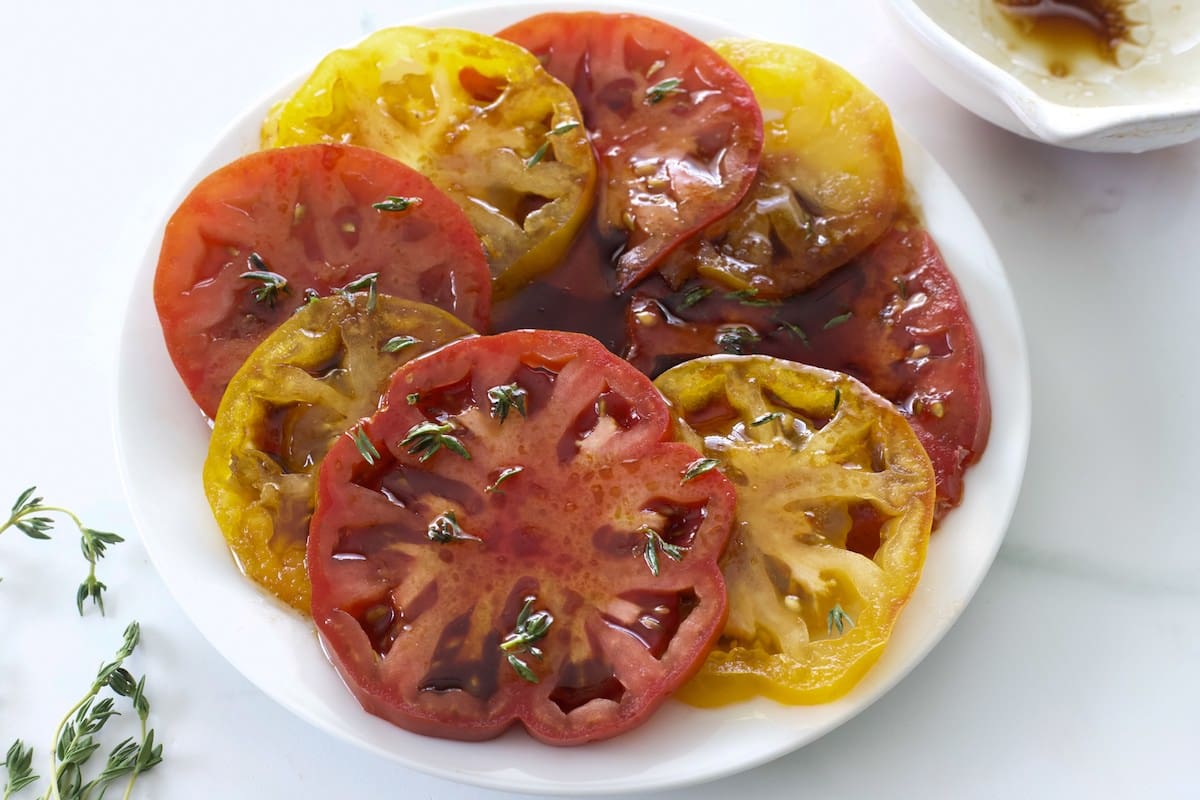
Marinated Tomatoes are one of those low-effort, high-reward things that instantly make you look like you have your life together in the kitchen. They’re bright, juicy, tangy, a little sweet, and they basically turn any summer tomato situation into something you actually want to put on everything.
Think of them as the “quick cousin” to something like slow-roasted tomato confit—same idea of concentrating flavor, just faster, fresher, and more raw. (If you like deeper, oven-roasted tomato flavor, I’ve got a version of that here: Tomato Confit.)
Why Is This a California Recipe
The simplicity is very much in line with California cooking– seasonal ingredients treated gently, with Mediterranean influence showing up in the use of olive oil, acid, and fresh herbs. It’s flexible, unfussy, and built around letting produce lead the way.
What Are Marinated Tomatoes?
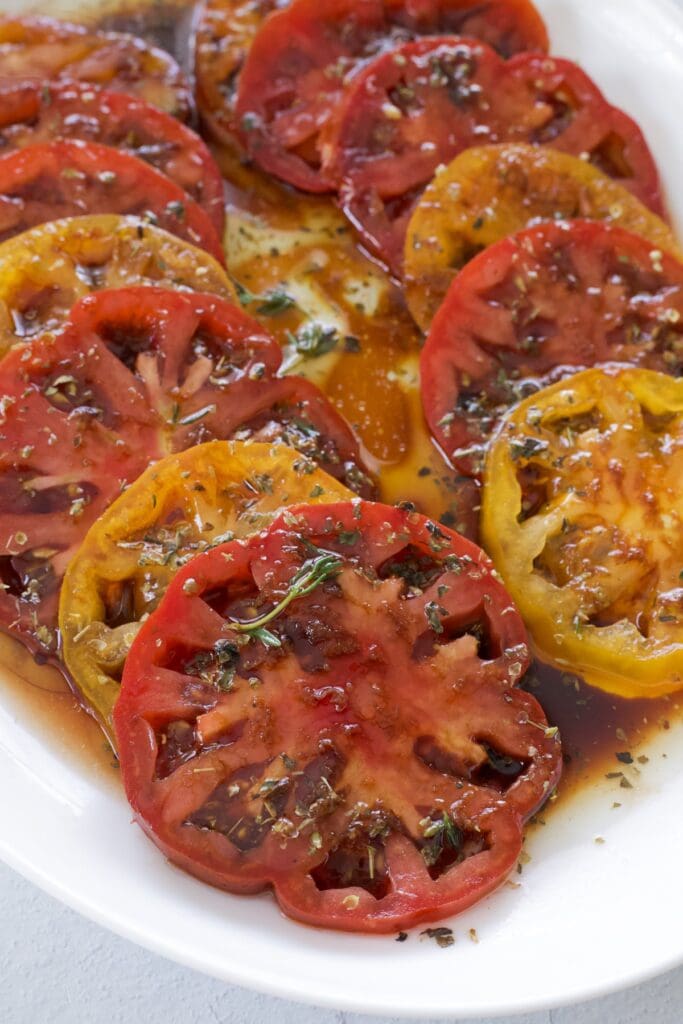
Marinated tomatoes are just fresh tomatoes sliced or chopped and tossed with a simple acidic dressing, herbs, salt, and usually a good olive oil.
The magic happens in the resting time. As they sit, the salt draws out the tomato juices, the vinegar or acid sharpens everything up, and the herbs infuse into the liquid.
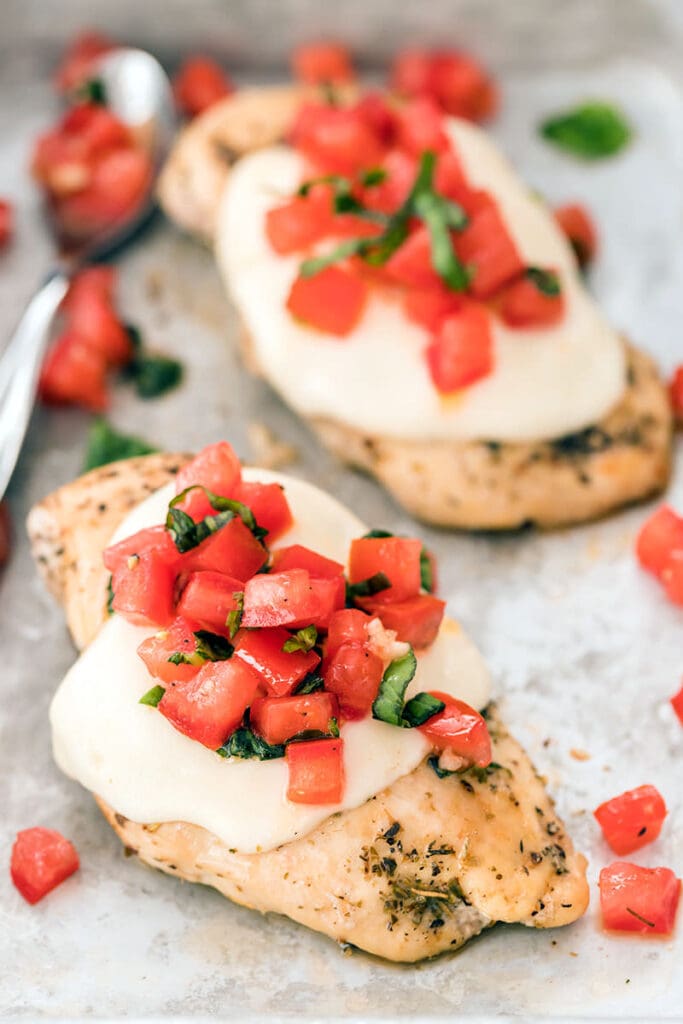
They’re great straight from the bowl, but even better spooned over grilled meat, toasted bread, burrata, or pasta. They also shine on simple proteins like chicken margherita, grilled steak, or fish.
Best Tomatoes to Marinate
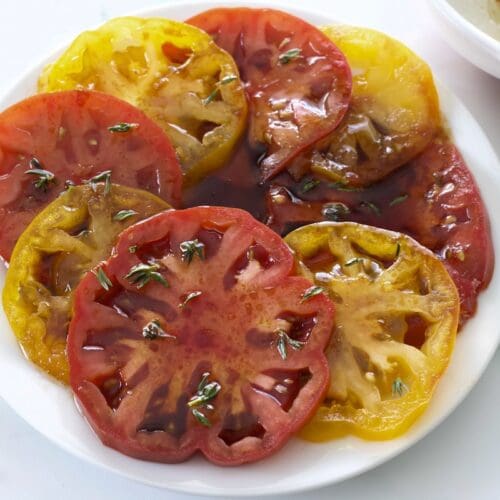
Heirloom tomatoes are one of the best choices when they’re in season. They’re juicy, flavorful, and naturally sweet with low acidity. Plus, they’re absolutely gorgeous.
The best results start with peak-season tomatoes from your local farmers market or any good California produce source you trust.
Heirloom tomatoes
Soft, irregular, super juicy. Best for raw marinating when you want big flavor and color.
Roma or plum tomatoes
Less juicy, more structured. They hold up well if you want something that stays a little firmer after marinating.
Cherry tomatoes
Probably the most reliable year-round option. They stay sweet and pop with flavor when halved.
Grape tomatoes
Similar to cherry, slightly less watery. Great if you want a cleaner bite.
Campari tomatoes
A really solid middle ground—sweet, juicy, and consistent even outside peak summer.
Vine-ripened tomatoes on the vine
Good fallback option when everything else looks sad. Not peak flavor, but they do the job.
If tomatoes aren’t in season, cherry or Campari are usually your safest bet.
The Marinade Base
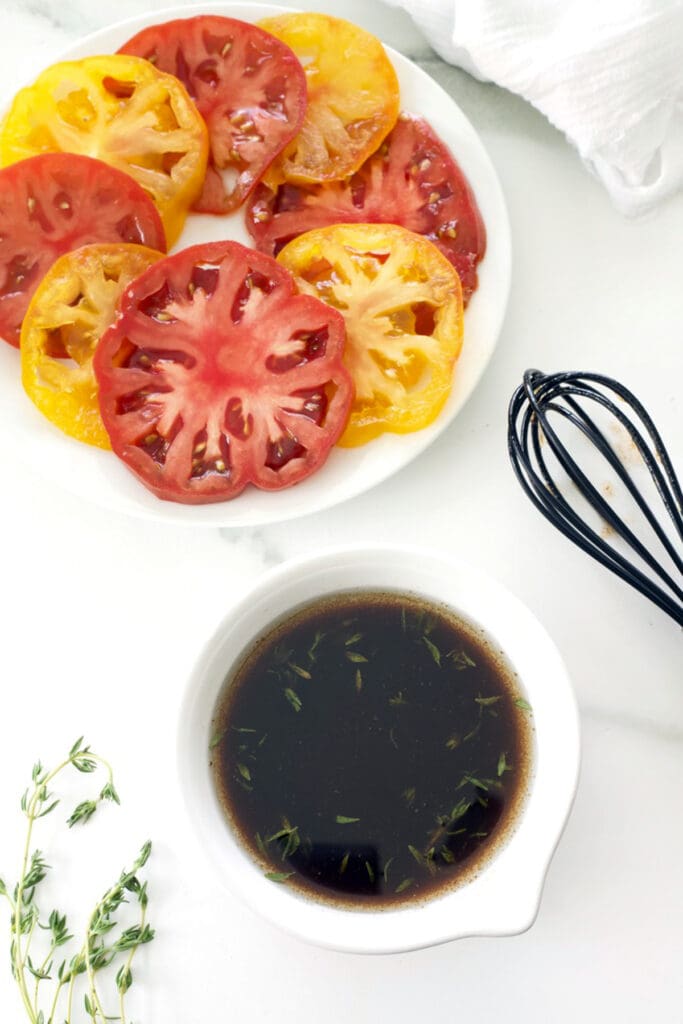
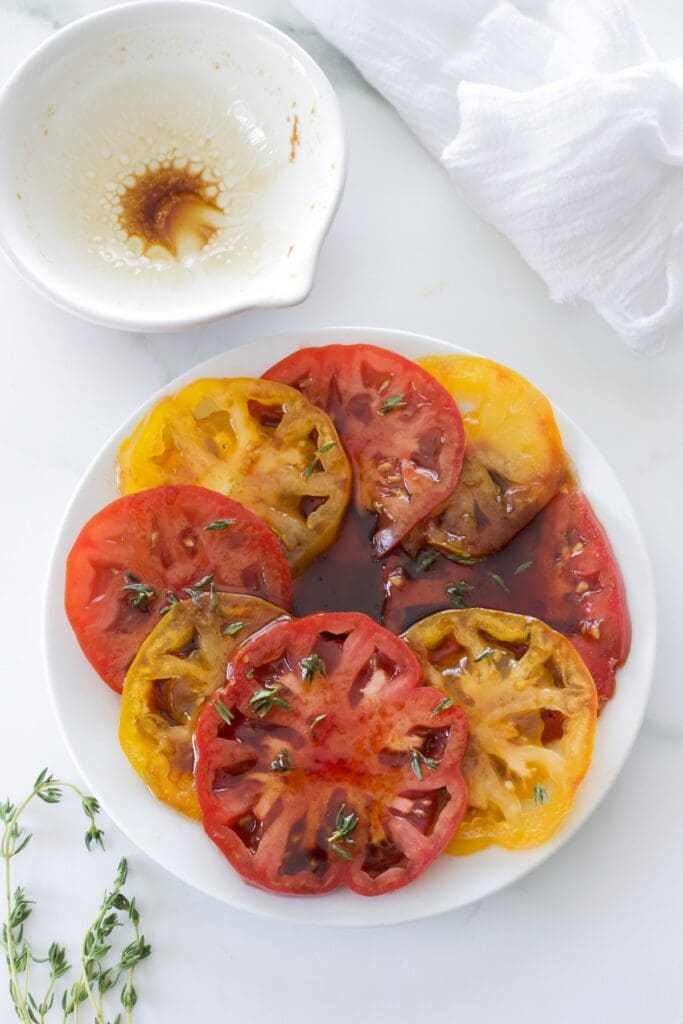
This is where you can really make it your own. The pictured version was made with olive oil, balsamic vinegar, fresh thyme, and salt. I find it’s the perfect balance, but there are other options, depending on what you like and have on hand.
Other vinegars that work really well
- Red wine vinegar – sharper, more “Italian deli” style
- White wine vinegar – lighter and cleaner
- Sherry vinegar – deeper, slightly nutty, very good with heirlooms
- Champagne vinegar – delicate and bright, great for cherry tomatoes
- Apple cider vinegar – a little fruity and rustic
Herbs That Work
Fresh herbs make this dish and really highlight the freshness of the tomatoes. Use only one or a combo of herbs:
- Basil – classic, slightly sweet, pairs perfectly with balsamic
- Oregano – more savory and punchy
- Thyme – subtle and earthy, great in smaller amounts
- Parsley – fresh, clean, helps balance richness
- Chives – mild onion flavor, great with creamy pairings like burrata
- Dill – unexpected but really good if you lean into lighter vinegar profiles
Basil is especially strong here, and if you end up with extra, it’s the same flavor base used in pasta al pesto or a simple pesto di basilico.
Optional Add-Ins
Here are some other ingredients to consider adding:
- Minced garlic — For a deeper, slightly sweeter version, add a spoonful of roasted garlic to the marinade.
- Shallots
- Crushed red pepper flakes
- Honey or a pinch of sugar
- Lemon zest
How to Serve Marinated Tomatoes
While I tend to eat them solo, or with burrata, here are some other ways to highlight them:
- These tomatoes are especially good spooned over toasted bread or served alongside an olive oil bread dip situation.
- Spoon over chicken margherita, steak, or fish
- Pile onto toasted sourdough with ricotta or burrata
- Toss with hot pasta for an instant sauce
- Serve alongside eggs (especially brunch situations)
- Add to grain bowls or salads for extra acidity
- Use as a topping for burgers or sandwiches instead of raw tomato slices
Would you like to save this?
Recipe Tips and Notes
Marinated tomatoes are best fresh the day you make them, but they do hold up.
- Store in the fridge for up to 2–3 days
- Let them come back to room temp before serving (cold dulls the flavor)
- Stir before using because the juices separate naturally
If you’re building out more seasonal dishes like this, you can find more inspiration in these recipes from California or explore how to cook with peak-season ingredients in general.
Marinated Tomatoes
Ingredients
- 3 large heirloom tomatoes (*Note 1)
- 3 cloves garlic, minced
- 1 cup extra virgin olive oil
- ½ cup balsamic vinegar (*Note 2)
- 1 tbsp chopped fresh herbs: basil, thyme, oregano (*Note 3)
- sea salt, to taste
Instructions
- In a small mixing bowl, add the garlic, olive oil, vinegar, herbs, and salt. Use a whisk to combine until emulsified. You can also use a small blender.
- Arrange the tomatoes on a large plate, slightly overlapping.
- Pour the marinade evenly over the tomatoes. Cover with the lid or plastic wrap, and marinate for 2-12 hours. Let come to room temperature before serving, for best flavor.